Starting a journal can feel like standing on the edge of a vast, quiet ocean right after a massive storm—it is intimidating, beautiful, and completely unmapped. For anyone navigating the complex waters of mental illness, trauma survival, or addiction recovery, putting a pen to paper is far more than a simple daily habit; it is a profound act of psychological rescue.
Clinical research consistently shows that expressive writing acts as a natural nervous system regulator, helping to move heavy, trapped survival energy out of the physical body and translate chaotic emotional flooding into clear, structured thoughts. This transformative power is why history’s most brilliant minds treated their pages like sacred laboratories. Leonardo da Vinci used his notebooks to blend intense scientific observations with wild, unfiltered imaginative sketches, while Virginia Woolf utilized her diary to map the fluctuating terrain of her own mind, consciously using her prose to soothe her psychological distress. By anchoring your thoughts to the page, you are joining a timeless lineage of creators who realized that to master the world outside, you must first map the world within.
The beauty of journaling is that there is no single “correct” way to do it, allowing you to completely subvert traditional expectations based on what your spirit needs today. If you need a gentle way to break the ice with yourself, you can try the Dual-Voice Dialogue, which involves writing a question with your dominant hand and answering it completely unedited with your non-dominant hand to tap into your subconscious mind. If you crave total spontaneity, you might lean toward Morning Pages—writing three pages of completely unedited, stream-of-consciousness brain-dumping the second you wake up to clear away mental fog. Stream-of-consciousness simply means letting your thoughts flow directly onto the page exactly as they happen in your head, without pausing to fix spelling, punctuation, or grammar, and without judging what comes out.
For the days when writer’s block feels completely unyielding, you can experiment with highly unique methods like Erotic Somatic Scripting, where you write stories exploring your deepest themes of power, luxury, or surrendering control to physically reconnect with your physical body. Another magical approach is Portrait Reframing, where you use your favorite color—perhaps a stormy indigo—to paint or sketch a small visual representation of your current emotional baseline, and then write words directly over the art until your analytical mind and your creative heart finally reach a peaceful truce.
Finding your perfect analog home requires tuning into your unique personality architecture and sensory preferences. If you are someone who values structure yet thrives on spontaneity, look for a notebook with unlined, completely blank pages—it removes all visual boundaries, giving you the complete creative freedom to sketch, build tracking grids, write sideways, or let your words wander freely across the sheet. Pay attention to paper weight; look for notebooks with a minimum of 120 GSM thick paper to ensure your favorite ink or art mediums never bleed through to the next page. If a rigid notebook feels too restrictive or triggers a fear of failure, opt for a disc-bound or three-ring system that allows you to easily tear out pages, add matching meditation logs, or completely shuffle your pages around. I like using a binder filled with pages I’ve printed out, and I track my mood swings in it.
Whatever format you choose, establish an unassailable ritual around it: light a candle, play a playlist curated specifically for the current season, and let your nervous system know that this physical space belongs entirely to you.
Before you write your very first entry, flip to the inside cover and claim absolute sovereignty over your new book. Make it a non-negotiable rule to clearly write your name, your blog or email contact info, and a gentle, polite reward offer in case it is ever lost. This simple act turns the notebook into a real, grounded extension of your life. However, if your writing contains raw, highly unfiltered confessions that feel entirely too explosive for public eyes, remember that you hold the ultimate authority over your privacy. You have full permission to buy a journal with a physical combination lock, hide it away in a secure sanctuary, or adopt a beautiful ritual of destructive release. Writing out a raw, fiery rant on loose-leaf paper and then safely burning the pages, shredding them into pieces, or washing the ink away with water can be an incredibly powerful somatic release, proving to your inner critic that you can voice your absolute truth without it ever being weaponized against you.
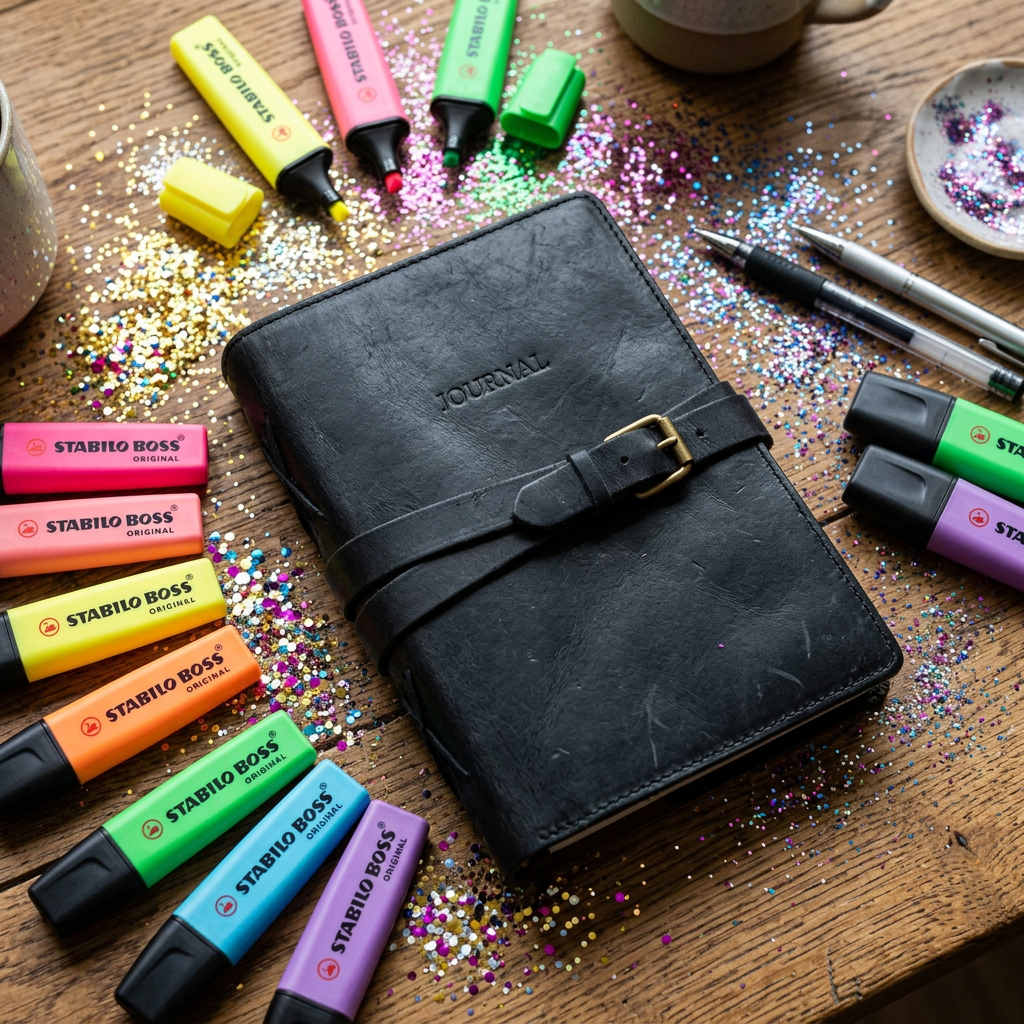
To give your new practice a loose framework, consider organizing your notebook into a few intuitive, soul-nourishing sections. You might dedicate the opening pages to Glimmers & Anchors, creating a sacred space for deep affirmations, poetry, and quotes that remind you of human goodness during challenging times. Next, keep a Daily Chronicle, which serves as a grounded record of what you actually did that day, the music playlists you listened to, or a quick tracker for your favorite meditations. Finally, reserve a section for Critical Close-Reading Notes, where you can summarize insights from self-help books, sociology essays, or spiritual texts that inspire you to grow. In my journal, I include an Annotation Key on a bookmark using colorful highlighters—assigning one color for “raw emotion,” one for “creative fiction sparks,” and another for “generational family patterns.” I also celebrate my personal evolution in recovery.
Remind yourself that no matter how hard the wind blows, you are masterfully navigating your own journey.
Free Journaling Prompts
If you have ever stared at a blank page and felt stuck, this guide is built just for you. There are no fancy words, clinical psychological terms, or complicated rules required here. Inside, you will find 300 simple, intriguing, and creative questions specifically shuffled to help you explore your past hurt, daily habits, deep connections, self-awareness, personal freedom, worries, and anger. Some questions are deeply emotional, while others are lighthearted and playful to help break your writer’s block. Treat this workbook like a safe harbor after a heavy storm. Pick any number that calls to you, grab
your favorite pen, and allow yourself to write completely unfiltered. Your story belongs entirely
to you.
Leave a Reply